Sorry for the long break; it turns out traveling internationally while trying to work and ski doesn’t leave a lot of free time. Especially when jet lag has you falling unconscious at 6PM or so.
Val Thorens
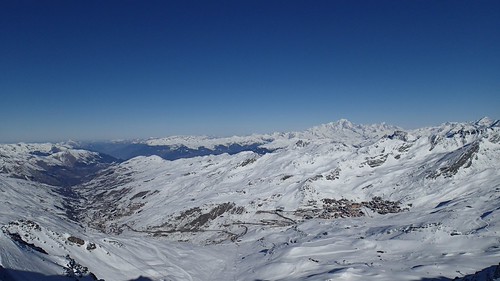
So… Val Thorens is fine, I guess. If you like stunning high alpine vistas:

Delicious French food:


(er, note to self: next time photograph delicious French meal before eating it.)
And bluebird days with wide-open, empty, beautifully groomed trails and more off-piste terrain than you can shake a stick at:
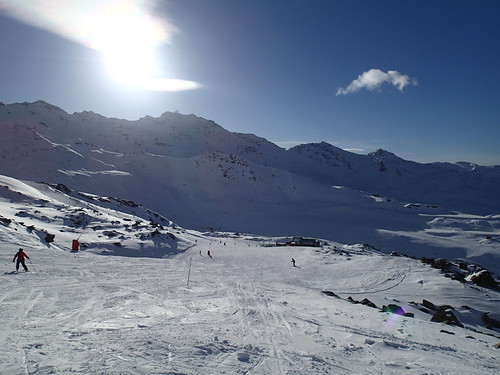

I guess if you’re into that kind of stuff it’s not so bad.
Val Thorens (www.valthorens.com) is the highest village in the “Trois Vallees” (Three Valleys, http://www.les3vallees.com) ski area in France, south of Chamonix and near the Italian border. Unlike the other ski areas we visited in Europe, Val Thorens was essentially built from the ground up as a destination ski resort in the early 1970s. This has pluses and minuses. It doesn’t have the history and charm of a place like Zermatt or St. Anton, and some of the early architecture is, to put it charitably, uninspired. On the other hand, it has an unbelievably good village layout where almost every piece of lodging is ski-in/ski-out or close to it and you can walk everywhere.
The week that we spent in France had unseasonably warm temperatures — Val Thorens is the highest point in the Three Valleys at 2300m (about 7000 feet), and it was above freezing in the village every day. It was extremely warm down further in the valleys, which was really doing a number on the snow. Above 2000m things stayed relatively solid, but much further down than that and things got very slushy and/or icy. So we spent a lot of time skiing in Val Thorens itself.
Even without fresh snow the skiing in Val Thorens was pretty damn good. With a big powder dump it must be off the charts — just the obviously accessible off piste terrain looked incredible, with a huge variety of difficulty available.
We did visit the other ski areas. Meribel was a charming village with some great ski slopes. The day we went over to Courcheval, however, conditions were a mess, and there were just way too many people crammed on the slopes over there. We literally skied one run there and just turned right around. Orelle, on the other side of Val Thorens, was beautiful:

The last night we spent in France we ended up staying down in Moutiers, which is where the train station is. And no visit to Valais would be complete without seeing the fabulous local dairy cooperative:


And their shiny new robotic cheese cave:


So all in all I’m going to say that Val Thorens was a big success:


Verbier
I’m going to be honest — we weren’t as impressed with Verbier as we were with St. Anton or Val Thorens. Maybe it was the overpriced shops, maybe the people weren’t just as nice, maybe we just got it on a bad week.
But it wasn’t all bad.
There was snow:


And food:


And a little sun:


And even some powder:


The problem with the skiing in Verbier was that we went there the week after those abnormally high temperatures across central Europe. Verbier isn’t as high up as Val Thorens, so a lot of the lower pistes were in really, really bad shape. Even a couple days of moderate snowfall couldn’t really salvage that skiing. But when we went higher up and stayed off the pistes, it was a whole different experience. I can see how if the conditions were much better, and you were equipped to go way off-piste, the skiing there could be unbelievable.
But even crummy pistes and high prices couldn’t ruin things entirely:

So… Europe! Land of mystery and enchantment! And cheese! And nutella! And high costs of living! And sometimes snow! Not a bad place to spend a month traveling around.
Stay tuned for our return to the US, and ski adventures on the West Coast!



 The Ski Geek